Skin cancer
Information about the risk factors, symptoms, skin checks and when to seek advice.
Overview
There are over 330,000 new cases of melanoma diagnosed worldwide each year. For non-melanoma skin cancer including Basal Cell Carcinoma (BCC) & Squamous Cell Carcinoma (SCC), there around 3 million new cases each year. The highest incidence rates are found in high income regions with predominantly fair-skinned populations.
Risks
Skin cancer usually develops as a result of a combination of risk factors, rather than a single cause. Some risks relate to genetics and skin type, while others are linked to sun exposure and lifestyle.
Having one or more risk factors does not mean you will develop skin cancer, but awareness can help guide skin checks and decisions about screening.
The key skin cancer risks include:
Age
Age is an important risk factor for all types of skin cancer. While BCC and SCC are more common in older adults, melanoma can occur at any age and is one of the more common cancers in younger adults under 40.
This is why skin awareness is important throughout adult life.
Skin tone
Skin cancer risk is closely linked to skin tone. People with lighter skin are at higher risk, particularly if they burn easily in the sun. However, skin cancer can occur in people of all skin tones, and it is sometimes diagnosed later in those with darker skin.
Regardless of skin tone, any new or changing skin lesion should be checked.
Family history
Having a close family member who has had skin cancer can increase your risk. This may be due to shared genetic factors, similar skin types, or shared sun-exposure habits.
If skin cancer runs in your family, you may benefit from more regular skin checks.
Lifestyle factors
Most (around 80%) skin cancers are linked to over exposure to ultraviolet light (UV) radiation, particularly from sunlight and tanning beds. Severe sunburns, especially in childhood, also increase risk later in life.
Protecting your skin from UV exposure remains one of the most effective ways to reduce risk.
Symptoms
Skin cancer can appear in different ways depending on the type. Changes may develop slowly and are often painless, which is why regular skin checks are important.
Non-melanoma skin cancer signs
Most people are concerned about abnormal moles but, non-melanoma skin cancers do not usually appear as moles. Signs to look out for include:
- A white, red or pink lump that doesn’t disappear after four weeks
- Discoloured patches on the skin that don’t heal after four weeks
- A scaly or crusty patch of skin that doesn’t heal after four weeks
- A sore or scab or ulcer that bleeds, hurts or itches and hasn’t healed after four weeks
- An ulcer that doesn’t heal
Melanoma: checking moles and skin changes
Most moles are harmless and remain unchanged throughout your life. However, a mole or patch of skin that changes in size, shape or colour over weeks or months should be checked.
You should seek medical advice if you notice:
- a mole changing shape or developing an irregular outline
- changes in colour, including darkening or multiple shades
- a mole that is growing or changing quickly
- itching, pain, bleeding, crusting, or inflammation
There is a simple ABCDE rule for mole checking:
Asymmetry
One half of your mole does not match the other.
Border
The edges of your mole are irregular, blurred or jagged.
Colour
The colour of your mole is uneven, with more than one shade.
Diameter
Your mole is wider than 6 mm in diameter (the size of a pencil eraser).
Evolving
Any changes in the moles size shape or symptoms over a variable time.
Be Skin Aware
The ABCDE Melanoma Rule
The ABCDE Melenoma Rule is a guide to help you look out for any moles on the skin that change in size, shape, colour, become itchy or start bleeding.
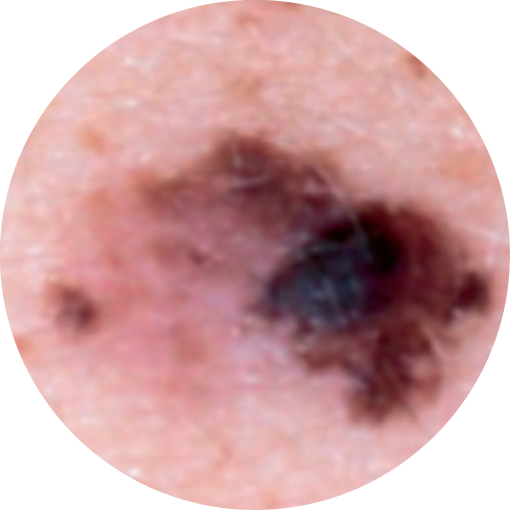
A=
ASYMMETRY:
When half the mole doesn't match the other
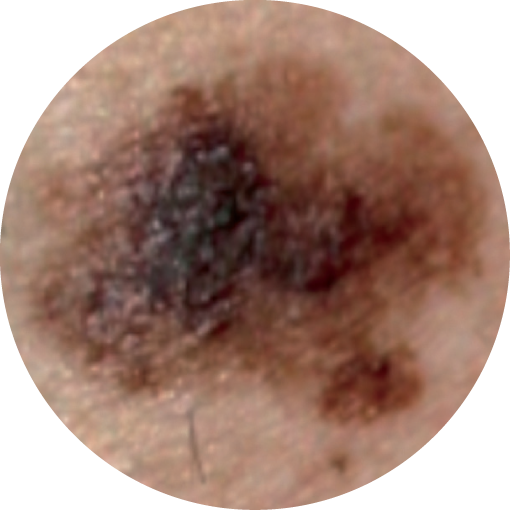
B=
BORDER:
When the borders of the mole are irregular/ragged or blurred
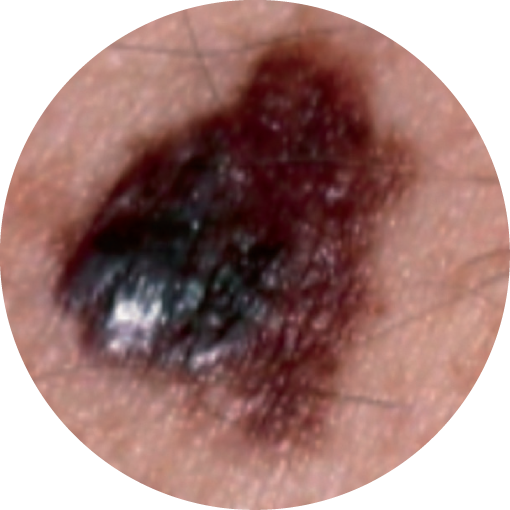
C=
COLOUR:
When the colour of the mole varies throughout and/or there appears to be no uniform pigmentation
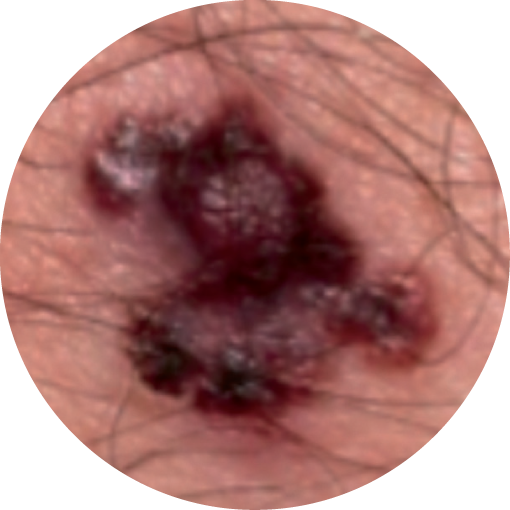
D=
DIAMETER:
If the diameter is greater than 6mm (the size of a pencils eraser)
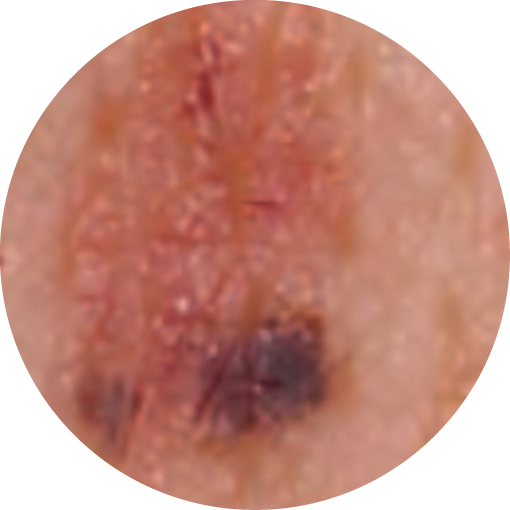
E=
EVOLVING:
Changes in the mole over a variable time, weeks, months, years
Reduce risk
Steps that can help reduce your risk of skin cancer include:
- Avoid over exposure to the sun
- Avoiding tanning beds
- Wear a hat or protective clothing to protect your head, face, neck and shoulders
- Apply a high-factor 4star + rated, waterproof sunscreen every two hours
- Wear sunglasses with UV protection
- Moving into the shade during peak UV hours (11.00hrs -15.00hrs)
- Consider regular skin screening
Be Skin Aware
How to reduce your risk of skin cancer
A number of changes to your lifestyle can significantly reduce your risk of skin cancer including:

Avoid over exposure to the sun

Wear a hat or protective clothing to protect your head, face, neck and shoulders

Avoid the use of sunbeds
Apply high-factor 4 star+ rated, waterproof sunscreen every two hours
Wear sunglasses with UV protection
Move into the shade from 11:00hrs-15:00hrs when UV is strongest

Consider regular skin screening
How skin cancer detection is evolving
Routine skin cancer screening is not currently recommended for the general population. However, people at higher risk are increasingly recognised as a group who may benefit from more structured skin surveillance.
In the future, screening guidance for high-risk individuals is likely to evolve toward earlier, more frequent, and more technology-supported detection. Advances in artificial intelligence (AI) are already helping clinicians identify suspicious skin lesions with high accuracy.
AI-assisted tools - including smartphone-based imaging and teledermatology - are expected to support earlier triage, particularly in primary care settings and in rural or underserved areas. These developments may help ensure timely assessment and reduce delays in diagnosis.
Clinical insight provided by Mr Per Hall, Consultant Plastic & Reconstructive Surgeon and Skin Cancer Specialist.
Getting tested
If you notice any skin changes that concern you, it’s important to discuss them with your healthcare provider and seek medical advice. Detecting skin cancer early can simplify treatment and significantly improve outcomes.