Breast cancer
Understand your risk, recognise changes early, and know when to get checked.
Overview
How common is breast cancer?
Breast cancer is one of the most common cancers worldwide. Each year, more than 2.3 million people are diagnosed globally, and 670,000 people die from the disease. Outcomes vary between countries depending on access to screening, early diagnosis, and treatment.
While these numbers can feel worrying, it’s important to know that many breast cancers are detected early, when treatment is most effective. Understanding your personal risk and being aware of changes in your body can play an important role in early detection.
Risks
Common risk factors
Breast cancer does not usually have a single cause. Instead, risk is influenced by a combination of factors, some of which you can change and others you cannot. These include age, family history, genetic inheritance, medical history, diet, lifestyle, ethnicity, reproductive history and exposure to estrogen. Having one or more risk factors does not mean you will develop breast cancer but understanding them can help guide decisions about screening and monitoring.
We explain some of the key risk factors in more detail below:
Age
The risk of developing breast cancer increases as we get older. Most breast cancers are diagnosed later in life, with a median age of around 62. This is why regular screening becomes more important with age, even if you feel well and have no symptoms.
Family History
Having a close family member, such as a mother or sister, who has had breast cancer can increase your risk. The risk may be higher if:
• a close relative was diagnosed at a younger age, or
• if several relatives have been affected.
In some families, breast cancer may be linked to inherited genetic changes, such as mutations in the BRCA1 or BRCA2 genes. Not everyone with a family history has an inherited gene mutation, but if breast cancer is common in your family, it may be helpful to discuss this with a healthcare professional.
Genetics
Certain inherited genetic changes, including BRCA1 or BRCA2 mutations, can significantly increase breast cancer risk. Women with these mutations have a higher lifetime risk (50-80%) of developing breast cancer before the age of 70.
Genetic testing is usually considered when there is a strong family history or other features suggesting an inherited risk.
Medical history
Some previous breast conditions can increase future risk. This includes certain findings on breast biopsy such as atypical hyperplasia or lobular carcinoma in situ (LCIS).
If you have been told you have one of these conditions, your healthcare provider may recommend closer monitoring or tailored screening.
Diet
Being overweight or obese, particularly after menopause, has been shown to increase breast cancer risk. Maintaining a healthy weight through balanced eating and regular physical activity can help reduce risk and improve overall health.
Lifestyle
Several lifestyle factors are associated with breast cancer risk, including:
- alcohol consumption
- low levels of physical activity
- obesity
- later age at first childbirth
- no breastfeeding
- exposure to estrogen, including some forms of hormone replacement therapy (HRT) or high-dose estrogen contraception.
Not all of these factors apply to everyone, but small, positive changes can still make a meaningful difference over time.
Be Breast Aware
How to reduce your risk of breast cancer
A number of changes to your lifestyle can significantly reduce your risk of breast cancer including:

Having children, especially at a younger age, and breastfeeding

Reducing your weight if overweight or obese

Increasing your physical activity

Reducing your alcohol intake

Avoiding HRT or oral contraception where possible
Having regular breast cancer screening from age 40+, depending on your risk
Race/Ethnicity
In the United States, breast cancer is diagnosed most frequently in non-Hispanic White women. Black/African American women are slightly less likely to be diagnosed overall, but are more likely to be diagnosed at a younger age and with more aggressive forms of breast cancer, such as triple-negative breast cancer.
Awareness of these differences helps ensure timely screening and prompt symptom assessment.
Breast cancer in men
Breast cancer is rare in men, but it can occur. Risk factors include:
- a family history of breast cancer
- inherited genetic mutations
- hormonal conditions
- previous radiation exposure
- certain medical conditions, such as chronic liver diseaseKlinefelter’s syndrome.
Men should seek medical advice if they notice any new or unusual breast changes.
Symptoms
Breast awareness means becoming familiar with how your breasts normally look and feel, so you’re more likely to notice changes early.
Breasts can change with age, hormones, or at different times of the month. Most changes are not caused by cancer, but it’s important to have any new, unusual, or persistent change checked by a healthcare professional.
Be Breast Aware
Are you showing any signs of these common symptoms of suspected breast cancer?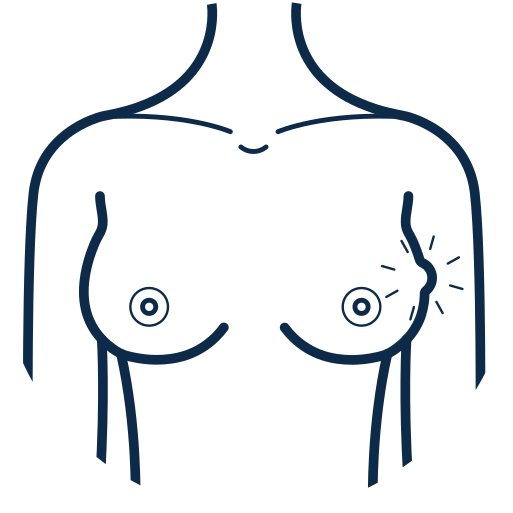
Lumps
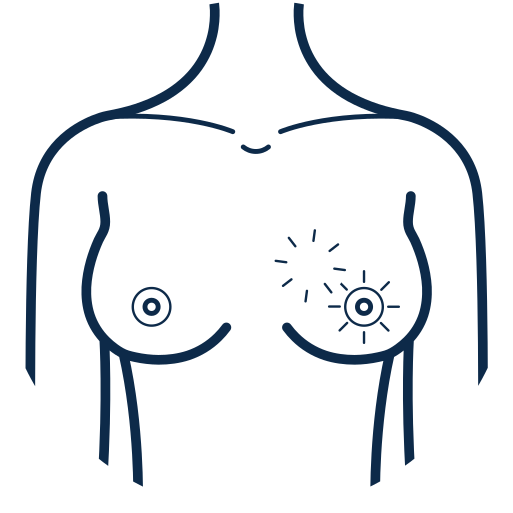
Breast or nipple pain
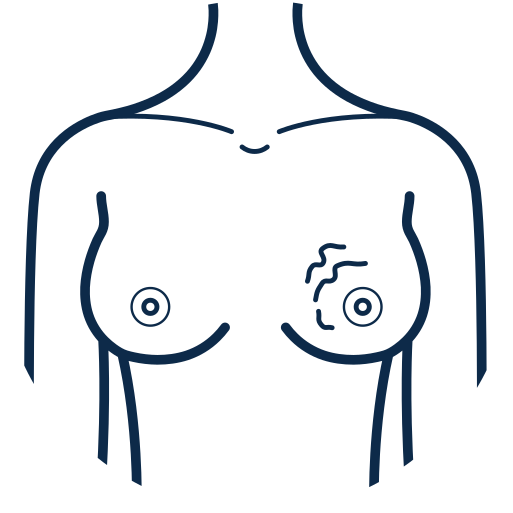
Changes to skin texture
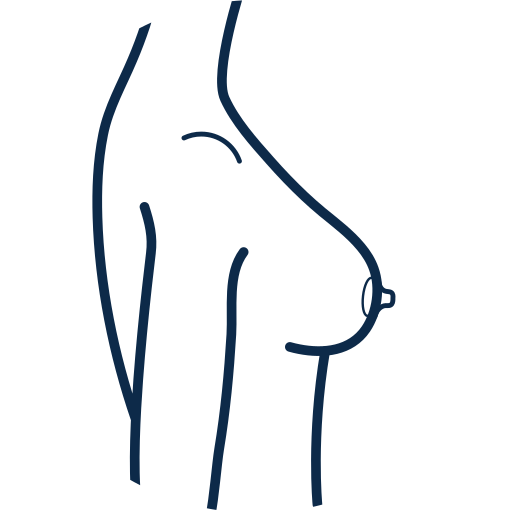
Nipple discharge
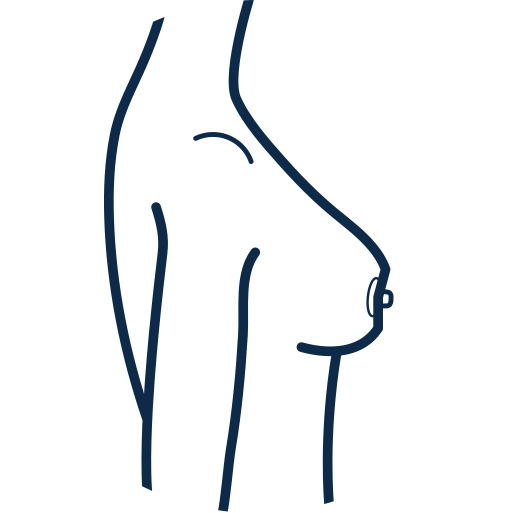
Nipple retraction or inversion
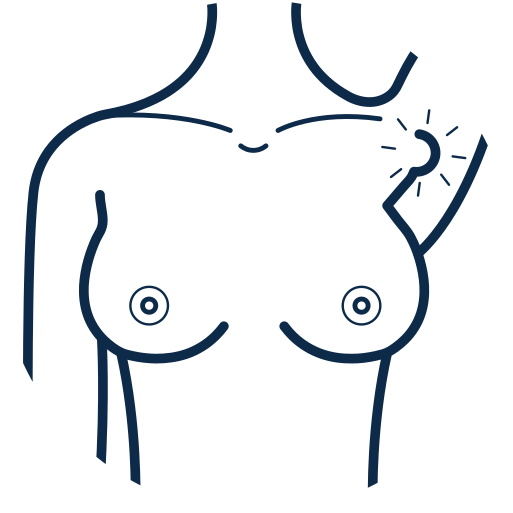
Lymph node changes
Lump in armpit
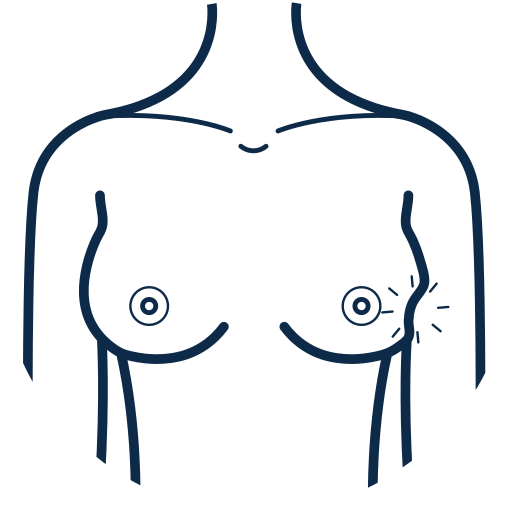
Dimpling
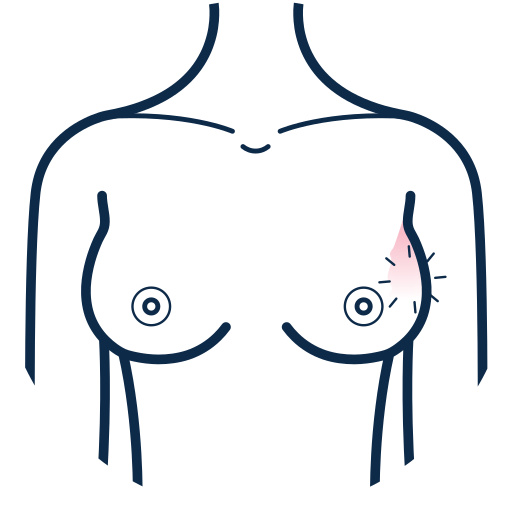
Redness
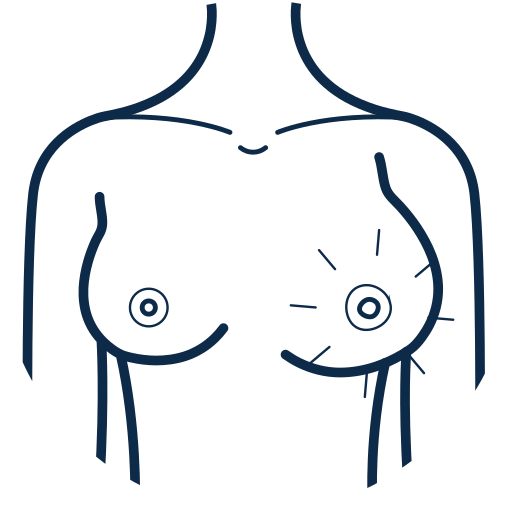
Swelling
Lumps
Breast or nipple pain
Changes to skin texture
Nipple discharge
Nipple retraction or inversion
Lymph node changes
Lump in armpit
Dimpling
Redness
Swelling
Know what is normal for you
Look at and feel your breasts to look for any recent changes
Know what changes (such as breast lumps or thickening) to look for
Report any changes to your Primary Care Physician without delay
The symptoms of breast cancer to look out for are:
Lumps
A breast lump or thickening in the breast which is different to the rest of the breast tissue
Breast or nipple pain
Continuous breast pain in one part of the breast or armpit
Swelling
One breast becomes larger or lower/higher than the other breast
Nipple retraction/inversion
A nipple becomes inverted or changes shape or position
Changes in skin/dimpling
Changes in the skin of your breasts including puckering or dimpling.
Lymph node changes, or lump in armpit
Swelling under the armpit or around the collarbone
Redness
A rash on or around the nipple
Nipple discharge
Discharge from one or both nipples
Male Symptoms
The most common symptom of breast cancer in men is a firm lump beneath or near the nipple, which is nearly always painless. Other symptoms may include:
Oozing from the nipple (a discharge) that may be blood-stained
Swelling of the breast
A sore (ulcer) in the skin of the breast
A nipple that is pulled into the breast (called nipple retraction)
Lumps under the arm
Reduce risk
A number of changes to your lifestyle can significantly reduce your risk of breast cancer including:
How to reduce your risk
Having children, especially at a younger age, and breastfeeding.
Reducing your weight if overweight or obese.
Increasing your physical activity.
Reducing your alcohol intake.
Avoiding HRT or oral contraception where possible.
Having regular breast cancer screening from age 40+, depending on your risk.
Getting tested
Screening
Breast cancer screening aims to detect cancer at an early stage, before symptoms develop. Early detection can significantly improve treatment options and outcomes.
Screening can also detect non-cancerous changes that may subsequently turn into cancer. In some cases, treating these early changes can help prevent cancer from developing.
Screening options and recommendations vary depending on age, risk, and local guidance. You should discuss what’s right for you with your employer, healthcare provider, or insurer.
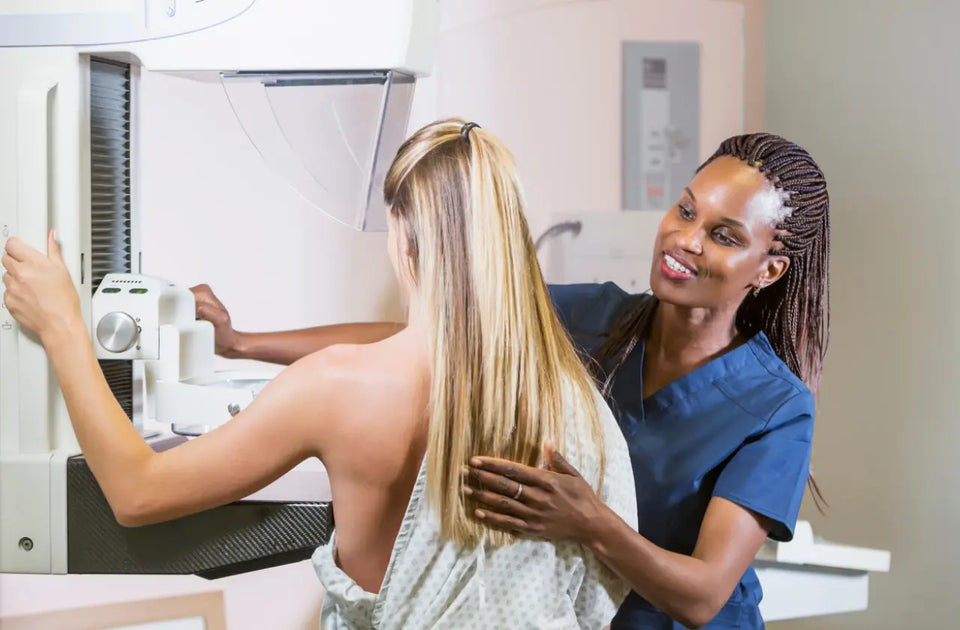
Screening is normally performed by mammography, and if any abnormality is detected, further investigations may be required, including extra mammogram images, breast ultrasound scan, MRI scan and a targeted biopsy of any area of concern.
Breast screening is not validated or recommended in men.
If you have symptoms
If you notice a breast lump or abnormality, it is normally investigated by ‘triple assessment’, (also called the triple test). This is considered the gold standard approach and includes a combination of:
- 1. History & Clinical Breast Examination (CBE)
- 2. Breast imaging (such as breast ultrasound and/or mammography and MRI in certain cases)
- 3. Tissue biopsy diagnosis by core needle biopsy under local anaesthesia, if needed
Ultrasound
The main diagnostic tool used in the clinic is ultrasound imaging which uses sound waves to produce pictures of the internal structures of the breast. Ultrasound is primarily used to help diagnose breast lumps or other changes the breast specialist may detect during your clinical breast examination. Ultrasound is safe, painless, non-invasive, and does not use radiation.
Mammograms
These involve taking an x-ray picture of each breast and can detect cancer at an early stage before changes can be felt in the breast by you or your healthcare professional.
MRI (Magnetic Resonance Imaging) of the breast
An MRI scan uses a strong magnet and radio waves to make a highly detailed image of the inside of the breasts. A small amount of dye is often given by intravenous injection to help highlight any abnormal areas in the breast. Breast MRI is usually used when there is discordance following routine triple assessment.
How breast cancer screening is evolving
Screening approaches continue to evolve, with a growing focus on personalising breast cancer screening based on individual risk and breast tissue characteristics.
Over the coming years, breast cancer screening is expected to become increasingly personalised, supported by advances in imaging and digital technology.
Emerging artificial intelligence (AI) tools are being developed to help estimate an individual’s risk of developing breast cancer within a defined time period, based on features seen on standard mammograms. This approach may enable screening programmes to identify women at higher risk who could benefit from earlier or more frequent imaging, while reducing unnecessary testing for those at lower risk.
For women with dense breast tissue, supplementing standard mammography with additional imaging techniques - such as contrast-enhanced mammography or abbreviated MRI - has shown promise in detecting cancers that may be harder to see on conventional mammograms alone.
Ongoing improvements in AI-assisted mammogram interpretation are also expected to support earlier detection, improve efficiency within screening services, and help reduce inequalities in access to screening and diagnosis.
Clinical perspective provided by Professor Simon Russell, Consultant Clinical Oncologist, Cambridge University Hospitals NHS Foundation Trust.
Remember - most breast changes are not cancer, but it’s always better to have symptoms checked. Seeking advice early can provide reassurance or allow treatment to start sooner if needed.